Laser Cut Box Generator with Lid
Design custom plans with Finger Joints (Free SVG)
Dimensions
Recommended: 0.02
Preview
Scroll: Zoom | Drag: Move
Example Gallery
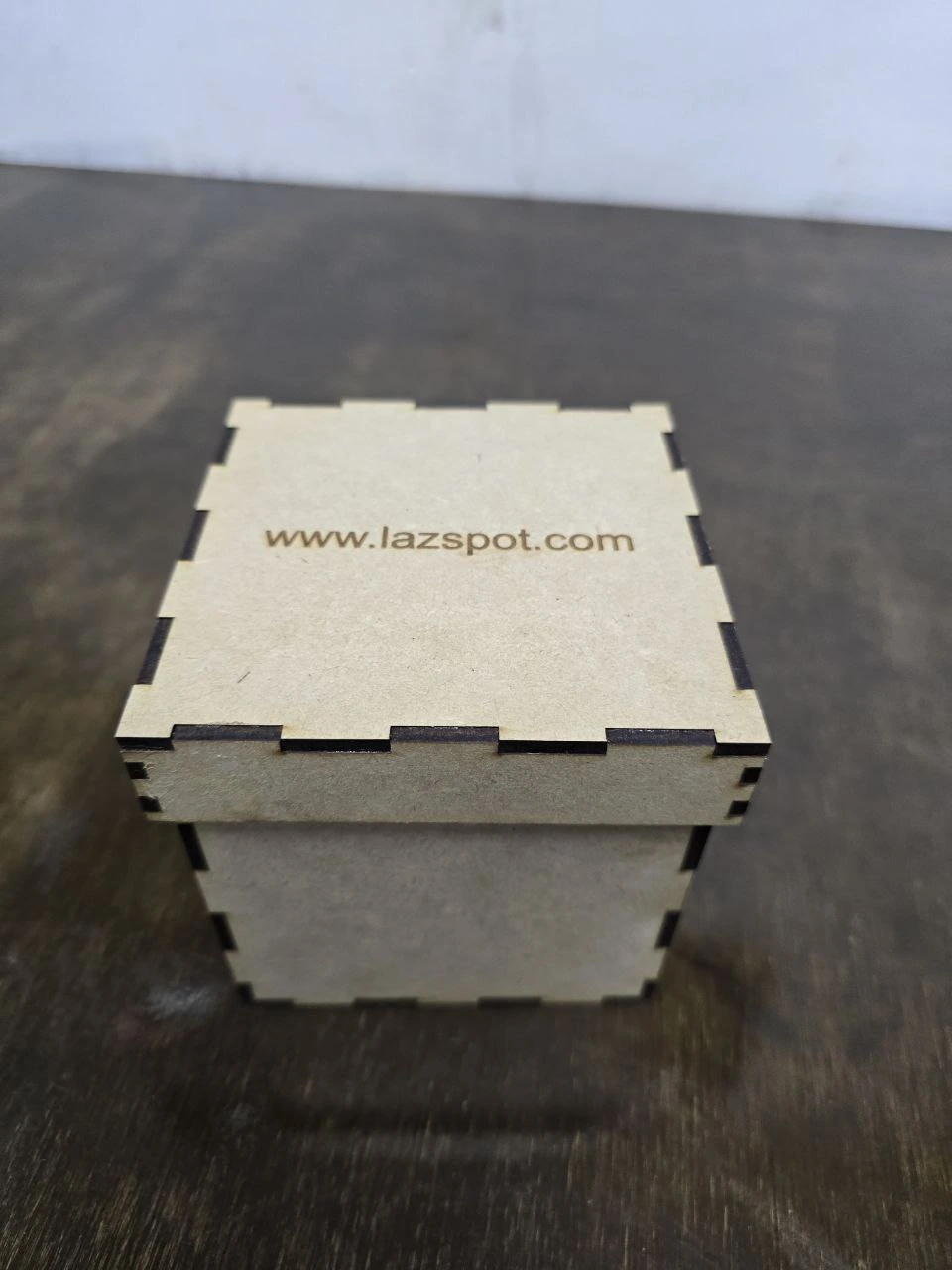
Complete Guide: Laser Cut Box Generator with Lid
This Box Generator with Lid automatically calculates the necessary vectors to create closed containers with Finger Joints. Designing a box with a lid requires millimeter precision for the closure to be functional and aesthetic, making it ideal for product packaging, gifts, organizers, or prototypes in MDF, plywood, and acrylic.
What is a Finger Joint and why use it?
The Finger Joint is the most popular technique in laser cutting for creating 3D structures from flat (2D) sheets. By interlocking the "teeth" of the box walls, the contact surface is multiplied, creating an extremely rigid structure that, if properly adjusted with the laser, fits together perfectly.
Popular Applications for these Boxes
- Product Packaging: Create premium packaging for handmade products, soaps, jewelry, or candles.
- Board Games and Cards: Design custom boxes to store sleeved cards, tokens, or small game boards.
- Electronics Projects: Use the generator to make a case for an Arduino or Raspberry Pi. Select "Internal measurements" to ensure the board fits perfectly.
- Tea Boxes and Organizers: Cut internal dividers separately and use this box as the sturdy outer structure.
Understanding Design Parameters
- Internal vs External Dimensions: Do you need to store a specific sized object? Check the "Use internal measurements" box. The generator will automatically add the material thickness to ensure the inside is exactly the dimensions you need.
- Kerf Compensation: Kerf is the thickness of the laser beam (the material that evaporates when cutting). A typical value for CO2 or Diode lasers is 0.1mm to 0.15mm. Entering your exact kerf ensures the finger joints press-fit together.
- Tooth Size: Controls the aesthetics and strength of the box. Small teeth (e.g., 5mm) look elegant on small boxes but take the laser longer to cut. Large teeth (e.g., 15mm-20mm) provide greater structural strength in large boxes and cut faster.
Keys for a Perfect Lid Fit
- Real Thickness (Caliper): Critical for fit! A "3mm" MDF panel usually measures 2.8mm or 3.2mm. Measure it with digital calipers and enter the exact value so the lid is neither loose nor too tight.
- Lid Clearance: Defines how tightly the box closes over the base.
- 👉 0.1mm - 0.2mm: Press fit (friction fit). Ideal if you don't want the lid to fall off when you turn the box over.
- 👉 0.3mm - 0.5mm: Smooth closure. Perfect for frequently used boxes where the lid must be removed effortlessly.
Frequently Asked Questions (FAQ)
Although a well-configured Kerf allows the box to hold together by friction ("click" fit), it is always recommended to use wood glue (PVA) on the joints. This ensures the box doesn't fall apart with continuous use or if it takes a fall.
If the teeth of the box are charred and stain your fingers, you are probably cutting too slowly with too much power, or your tooth size is too small. Increasing the tooth size reduces the time the laser spends slowing down in the corners, decreasing burn marks.
Yes, the generator works perfectly for acrylic. However, be very careful with the Kerf and Clearance values. Acrylic is rigid and brittle; if the Kerf is too aggressive and you try to force the assembly with a rubber mallet, the acrylic will crack. Always do a small test cut first.
Recommended workflow
- Configure the base dimensions and lid height according to your project.
- Measure your material with a caliper and adjust the thickness and kerf.
- Download the cutting plan in SVG format (100% free and compatible with software like LightBurn, RDWorks, or Adobe Illustrator).
- First cut only the base and one side wall to do a small "test cut" and validate that the teeth fit, before wasting material on the full box.